
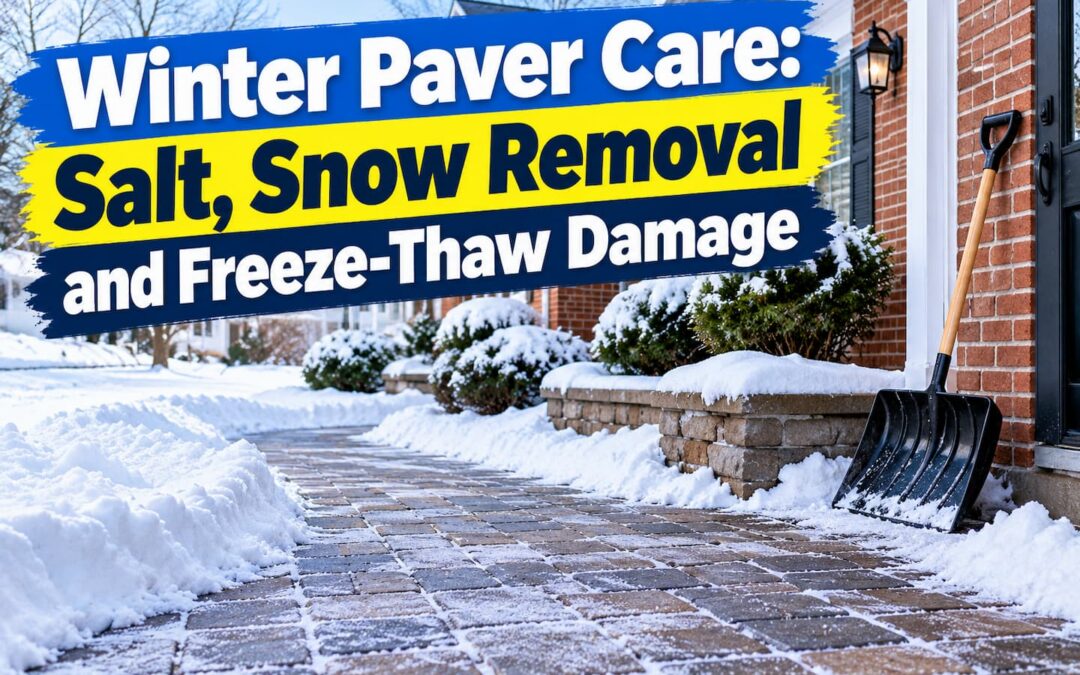
A New Jersey winter can be hard on a patio, walkway or driveway. Along the shore in Brick, Point Pleasant and Toms River, storms often bring wet snow, sleet and rain in the same week. Farther inland in Middlesex and Mercer counties, nights tend to run colder, and surfaces freeze and thaw again and again. Good winter paver care comes down to a few habits: choose the right de-icer, use tools that won’t scratch, keep water moving off the surface, and check everything once spring arrives.
Why Winter Is Tough on Pavers
Good winter paver care is easier because interlocking pavers handle cold weather well when they are installed on a solid, well-drained base. Trouble usually starts with water. Controlling water is the heart of winter paver care. When water sits on the surface or in low spots and then freezes, it expands. Over many cycles that can loosen joint sand, lift edges and wear the paver surface.
The Concrete Masonry and Hardscapes Association (CMHA, the group formed when ICPI and NCMA combined) points out that uneven pavers create spots where water pools and freezes, and that a raised edge can catch a shovel, snow blower or plow and damage both the paver and the equipment. That is why base preparation matters so much. If you want to understand what sits under your pavers and why it controls drainage, see our post on why a proper paver foundation matters.
Shore Winters vs. Inland Winters
Homeowners near the coast in Ocean and Monmouth counties often deal with heavy, wet snow and salt spray carried on the wind. Inland, in towns like East Brunswick, Hamilton or Freehold, more days hover around freezing, which means more freeze-thaw cycles. In both areas the goal of winter paver care is the same: clear snow early, use as little de-icer as you can, and avoid letting meltwater sit on the surface.
Choosing a De-Icer: Winter Paver Care Basics
This is where most damage happens, and where advice can be confusing. Here is what paver manufacturers and the industry association actually say.
Rock Salt (Sodium Chloride)
Plain rock salt is the de-icer most paver makers point to. Unilock’s winter paver maintenance guide says sodium chloride products can be used safely on its pavers, and notes that rock salt stops working below about 16°F. CMHA recommends standard road salt because it causes the least damage to concrete surfaces in freeze-thaw climates. Cambridge Pavingstones also recommends using only sodium chloride and avoiding products that blend several chemicals.
Rock salt is not harmless, though. Unilock warns it can hurt nearby grass, plants and metal. Rutgers plant experts note that sodium chloride can be very damaging to plants, and that plants within roughly 15 feet of treated pavement face higher risk. Spread it thinly and only where you need it.
Magnesium Chloride and Blended Products
Unilock says to always avoid magnesium-based products because they may damage the paver surface. CMHA advises avoiding de-icers that contain magnesium chloride or calcium magnesium acetate (CMA), saying they significantly increase the potential for damage. Some retailers market magnesium chloride as paver-safe, so read the bag carefully and follow your paver manufacturer’s guidance.
Calcium Chloride
Calcium chloride is sold as a fast-acting ice melt. The manufacturer pages we reviewed do not endorse it for pavers, and Cambridge recommends sodium chloride only. If you are unsure what your pavers can handle, check with the manufacturer or ask us before you buy.
Sand for Traction
Sand does not melt ice, but it gives your boots something to grip. CMHA suggests keeping sand on hand for traction and notes that it can help top up the joints as the ice melts. Once the ice is gone, sweep up leftover salt and sand so it does not get tracked indoors or pile up on the surface. Cleaning up after the storm is part of good winter paver care.
Snow Removal Without Scratches
- Use a plastic shovel. Unilock notes that metal shovel and plow blades can scratch pavers and leave metal bits that cause rust stains.
- Cover metal blades. If your snow blower or plow has a metal edge, add a plastic or rubber blade cover.
- Swap the skid shoes. Many two-stage snow blowers can take non-abrasive polyurethane skid shoes, which are sold to protect pavers, stamped concrete and tile. Set them so the scraper rides just above the surface.
- Tell your plow crew. Unilock recommends that hired snow removal services follow the same precautions.
- Shovel first, then treat. Removing loose snow before you spread de-icer means you need far less product. It is one of the simplest habits in winter paver care.
Freeze-Thaw Damage and Drainage
For winter paver care, sweep away leaves and dirt before the first storm. CMHA notes that organic matter left on the surface over winter can stain pavers. Look for low spots, sunken pavers or edges that sit higher than their neighbors. CMHA describes lifting and resetting pavers that have moved less than 1/4 inch, then refilling the joints. Larger dips usually point to a base problem.
Also check where your downspouts and sump lines discharge. Water dumped onto a walkway all winter will freeze into a sheet of ice and keep the joints saturated. Redirecting that water is one of the simplest ways to cut down on freeze-thaw wear.
Polymeric Sand Joints and Sealing Timing
Many patios and driveways have polymeric sand in the joints, which hardens to resist weeds and washout. It needs warm, dry weather to set. One manufacturer’s label, for example, calls for at least 48 hours at a minimum of 60°F with no rain for the sand to harden before sealing. That is hard to get in a Jersey Shore November, so joint refills are often best left until spring. Waiting is a smart part of winter paver care, not a shortcut.
Sealing follows the same logic. The same sealer label lists an application range of 40°F to 85°F, and Nicolock suggests waiting several months after installation before sealing and resealing every three to five years. Always follow the directions on the specific product used on your project. If you are planning new work, our post on fall paver installation in New Jersey explains how timing affects the job.
Winter Paver Care: Spring Inspection Checklist
- Sweep up leftover sand, salt and grit.
- Look for sunken areas, lifted edges, rocking pavers or washed-out joints.
- Check for white haze, rust spots or scratches from winter equipment.
- Rinse salt from nearby plant beds and the lawn edge.
- Note any puddles that form after rain, since standing water points to a drainage issue.
If you spot several of these issues, our guide to 7 signs your patio, walkway or driveway needs attention can help you decide what to fix. When damage is widespread, read when it is time to remove and replace pavers.
Frequently Asked Questions
Is rock salt safe for pavers?
Several paver manufacturers, including Unilock and Cambridge, say sodium chloride (rock salt) can be used on their pavers. Use it sparingly, since it can harm nearby plants, grass and metal.
What de-icer should I avoid on pavers?
Unilock and CMHA both advise avoiding magnesium-based de-icers, and CMHA also lists calcium magnesium acetate (CMA). Check your paver manufacturer’s guidance before using any blended ice melt.
Can I use a snow blower on a paver driveway?
Yes. Cover any metal scraper blade with plastic or rubber, and consider non-abrasive skid shoes so the machine does not grind against the surface.
Should I seal my pavers before winter?
Only if the weather fits the product’s label. Most sealers need dry conditions and temperatures within a set range. In late fall at the shore, it is often safer to wait until spring. Timing the sealer correctly is a key part of winter paver care.
Why are my pavers uneven after winter?
Freeze-thaw cycles, poor drainage or a weak base can let pavers settle or lift. Small shifts can often be reset. Larger dips may need base repair.
Get Winter Paver Care Help in New Jersey
American Pavers and Landscaping LLC repairs, resets and installs pavers for homeowners in Brick and across Ocean, Monmouth, Middlesex and Mercer counties. If you notice low spots, loose joints or winter damage, call (609) 384-1357 or request a free quote. Our office is at 533 Dorothy Place, Brick, NJ 08723.