
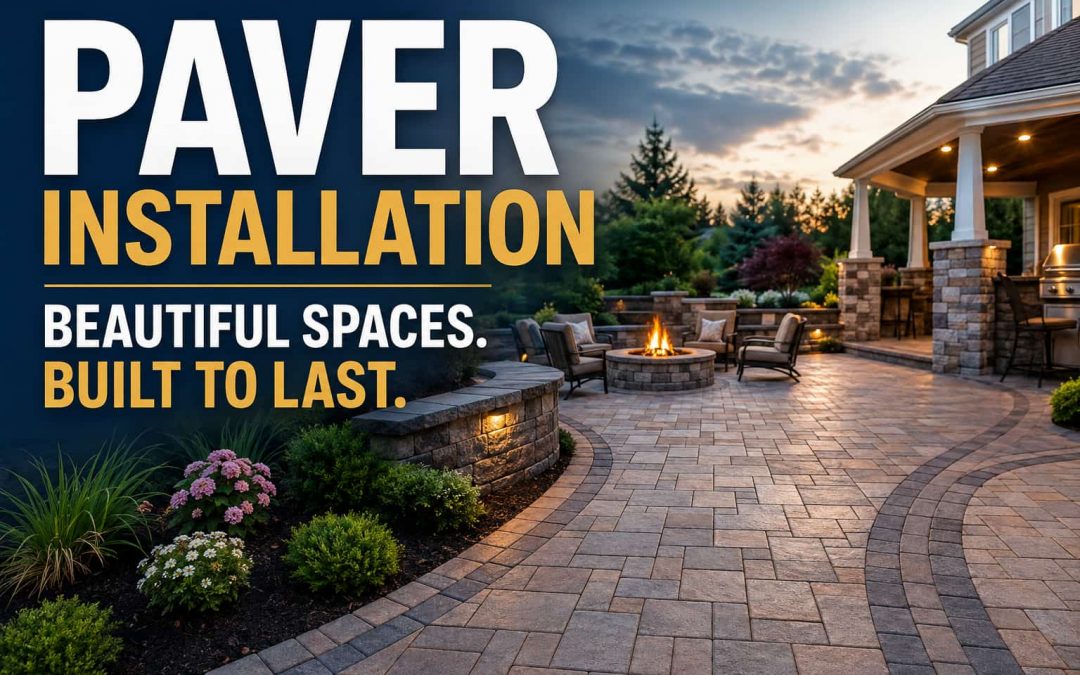
paver installation in NJ
A successful paver installation in NJ starts below the surface. Proper excavation, base preparation, compaction, grading, drainage, and edge restraint are just as important as choosing the right pavers for creating a patio, walkway, or driveway that stays attractive and stable over time. Rutgers University offers resources related to landscape and environmental sciences, providing useful information for homeowners planning and managing outdoor spaces.
For New Jersey homeowners, proper installation is especially important because outdoor surfaces must handle rain, snow, freezing temperatures, summer heat, and repeated freeze-thaw cycles.
Whether you’re considering a new patio, walkway, driveway, pool area, or backyard transformation, understanding how pavers should be installed can help you make better decisions, protect your investment, and avoid costly problems later.
Why Choose Pavers for Your Outdoor Space?
Pavers are one of the most versatile options for residential outdoor spaces because they combine durability with a wide variety of design possibilities.
Depending on the property and project, pavers can be used for:
- Patios
- Walkways
- Driveways
- Pool surrounds
- Garden paths
- Outdoor kitchens
- Fire pit areas
- Steps and entrances
- Backyard entertainment areas
- Landscape borders
Unlike a single poured surface, a paver system consists of individual units installed over a carefully prepared foundation. When installed correctly, individual pavers can also be repaired or replaced without necessarily rebuilding the entire surface.
The Most Important Part of Paver Installation Is the Part You Can’t See
Homeowners naturally spend a lot of time choosing the color, shape, pattern, and style of their pavers.
Those decisions matter—but what’s underneath the pavers can be even more important.
A beautiful patio installed over an improperly prepared base may eventually develop problems such as sinking, shifting, uneven areas, separating edges, or poor drainage.
That’s why professional paver installation should be viewed as a complete system rather than simply placing stones on the ground.
How Are Pavers Professionally Installed?
Although every property is different, a professional residential paver installation generally involves several important stages.
1. Site Evaluation
Before excavation begins, the installation area should be evaluated.
Important considerations include:
- Existing soil conditions
- Current elevation
- Drainage
- Water flow
- Existing concrete or hardscape
- Nearby structures
- Intended use of the area
- Landscape features
- Access to the installation area
A patio used primarily for outdoor furniture has different requirements from a driveway designed to support vehicles.
The installation plan should reflect those differences.
2. Excavation
The existing surface and soil are excavated to create sufficient space for the complete paver system.
Simply removing a thin layer of soil and placing pavers over it can create problems later.
The required excavation depends on several factors, including the type of project, soil conditions, paver system, expected load, and site characteristics.
3. Preparing the Base
The base is one of the most important components of a paver installation.
A properly prepared aggregate base helps distribute loads and provides a stable foundation for the finished surface.
Base material should typically be installed and compacted according to the requirements of the particular project.
Poor base preparation is one reason paver surfaces can develop low spots or movement over time.
4. Compaction
Installing base material isn’t enough—it also needs to be properly compacted.
Compaction helps create a stable foundation and reduces unwanted settlement.
This is one of the stages homeowners rarely see after a project is completed, which makes choosing an experienced paver contractor particularly important.
5. Establishing Proper Grade and Drainage
Water needs somewhere to go.
A paver patio may look perfectly level to the eye while actually incorporating a carefully planned slope that directs water appropriately.
Poor drainage can contribute to:
- Standing water
- Soil erosion
- Base deterioration
- Landscape damage
- Water moving toward structures
- Premature movement of the paved surface
Drainage should therefore be considered before installation, not after water problems appear.
Why New Jersey Weather Matters
Paver installation in New Jersey requires particular attention to seasonal conditions.
The ground and outdoor surfaces experience repeated changes throughout the year, including freezing temperatures, thawing, rain, snow, and summer heat.
Water is particularly important.
If water accumulates where it shouldn’t and temperatures drop below freezing, expansion and movement can place additional stress on an improperly constructed surface.
This is one reason proper drainage, base preparation, and compaction are so important for New Jersey properties.
Choosing Pavers for Your Home
Once the structural considerations are addressed, homeowners can focus on design.
Modern pavers are available in many:
- Colors
- Textures
- Shapes
- Sizes
- Patterns
- Finishes
The best choice isn’t necessarily whichever paver looks best in a catalog.
Consider how the pavers will complement your home’s:
- Exterior color
- Architecture
- Landscaping
- Existing hardscaping
- Outdoor furniture
- Surrounding materials
A well-designed paver project should feel like a natural extension of the property rather than something added afterward.
Patio Paver Installation
A paver patio can transform an underused backyard into a functional outdoor living area.
Before deciding on the size of your patio, consider how you’ll actually use it.
Will you need room for:
- A dining table?
- Grill?
- Outdoor kitchen?
- Fire pit?
- Lounge furniture?
- Umbrellas?
- Planters?
- Walking paths?
Planning these elements before installation can prevent a common mistake: building a beautiful patio that turns out to be too small for the way the family wants to use it.
Paver Walkways
Walkways aren’t only decorative.
A properly planned walkway helps create a natural traffic pattern through the property while connecting important areas such as the driveway, front entrance, patio, backyard, pool, or garden.
The width, curves, pattern, and surrounding landscaping can dramatically affect the finished appearance.
Driveway Pavers
Driveways require additional consideration because the surface must regularly support vehicle loads.
Base preparation, compaction, drainage, edge restraint, and the selected paver system become especially important.
A driveway shouldn’t simply be treated like a larger patio.
The intended load needs to be considered during the planning and installation process.
Why Do Pavers Sometimes Sink?
One of the most common questions homeowners have is:
“Why are my pavers sinking?”
There isn’t one universal cause.
Possible reasons can include:
- Inadequate base preparation
- Poor compaction
- Drainage problems
- Soil movement
- Erosion
- Edge failure
- Improper previous installation
- Changes beneath the paved area
The correct repair depends on identifying the underlying cause.
Simply lifting a sunken paver and adding material underneath may improve its appearance temporarily without correcting the problem that caused it to sink.
Can Existing Pavers Be Repaired?
Yes. One advantage of individual pavers is that certain damaged areas can often be repaired without replacing the entire patio or walkway.
Depending on the condition, paver repair may involve removing affected pavers, correcting the underlying problem, preparing the area again, and reinstalling the pavers.
However, widespread movement or major base problems may require more extensive work.
A professional evaluation can help determine whether repair or replacement makes more sense.
Should Old Concrete Be Removed Before Installing Pavers?
It depends.
Existing concrete shouldn’t automatically be covered simply because installing over it appears easier.
A contractor should first evaluate factors such as:
- Condition of the concrete
- Cracking
- Existing elevation
- Drainage
- Available clearance
- Structural stability
- Relationship to doors and steps
- Surrounding landscape
In some situations, removing the existing surface and rebuilding the area may provide greater control over the final paver system.
Paver Installation Checklist
| Installation Stage | Purpose | Why It Matters |
|---|---|---|
| Site Evaluation | Understand existing conditions | Helps identify drainage and structural concerns |
| Excavation | Prepare installation depth | Creates room for the complete system |
| Base Preparation | Establish foundation | Helps support the paved surface |
| Compaction | Stabilize base material | Helps reduce settlement |
| Grading | Control water movement | Helps prevent drainage problems |
| Bedding Layer | Prepare setting surface | Supports consistent placement |
| Paver Installation | Create finished design | Establishes pattern and surface |
| Edge Restraint | Secure perimeter | Helps limit lateral movement |
| Joint Preparation | Stabilize pavers | Supports the completed system |
| Final Inspection | Check finished installation | Identifies alignment or drainage concerns |
Questions to Ask a Paver Contractor Before Hiring Them
Don’t limit the conversation to:
“How much will my patio cost?”
Ask questions about the installation itself:
How will you prepare the base?
How will drainage be handled?
How much excavation does this project require?
What happens if you discover poor soil or another problem during excavation?
What type of edge restraint will be used?
How will the base be compacted?
Have you completed similar projects in New Jersey?
Can I see photographs of the installation process—not only completed patios?
A professional contractor should be comfortable explaining what happens underneath the finished surface.
Don’t Choose a Paver Contractor Based on Price Alone
Comparing estimates is smart, but make sure you’re comparing the same scope of work.
One estimate may include extensive excavation, base preparation, drainage work, proper compaction, edge restraints, and site cleanup, while another may involve considerably less preparation.
The finished surfaces might initially look similar.
The differences may become apparent later.
Ask each contractor to explain exactly how the project will be constructed before making your decision.
Planning a Paver Project in New Jersey?
A new paver patio, walkway, driveway, or outdoor living area can significantly change how you use and enjoy your property.
But beautiful pavers are only one part of a successful project.
Good paver installation starts with what’s underneath them.
Careful planning, proper site preparation, drainage management, base construction, compaction, and professional installation can help create an outdoor surface designed to perform for years.
If you’re considering a new paver installation, paver repair, paver removal, or landscaping project, contact American Pavers & Landscaping LLC to discuss your property and the options available.
Contact American Pavers & Landscaping LLC
Phone: (609) 384-1357
Email: info@americanpaversnj.com
Website: https://americanpaversnj.com/